

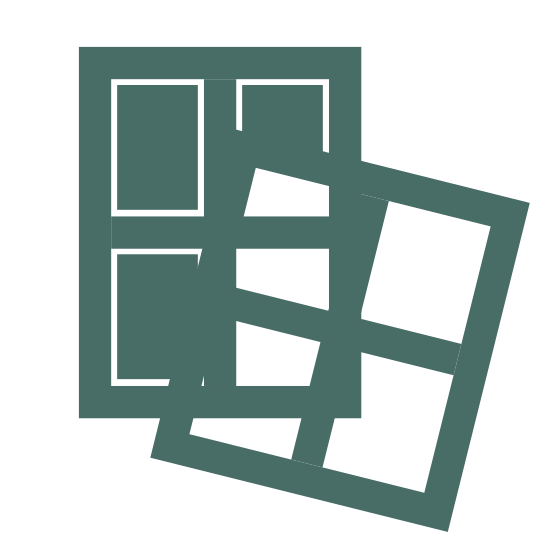
Product view
See the bay windows itself
The isolated product view keeps the sash arrangement and operating geometry clear before the room-fit and installation questions begin.

How it operates
The short answer
The composition may combine fixed and operable units; configuration varies by product and opening.
Common uses
- Projecting window features
- Combinations intended to add view, daylight, or interior depth
Ventilation, view, and daylight
- Ventilation depends on which units are operable.
- Multiple planes create angled views and a projecting form.
Cleaning and maintenance
- Exterior access, roof or cap details, joints, and finish surfaces need inspection and maintenance.
Installation and performance considerations
- Projection, support, flashing, roof/cap details, interior seat or trim, and opening condition can make scope materially different from a flat window.
- Review the complete mulled configuration, glass area, joints, and installation details.
Compare nearby choices
Style comparison
Bow Windows
Bay compositions commonly use fewer units and sharper angles; bow compositions commonly use more units to form a gentler curve.
ExploreSources
Sources
- Window Installation — U.S. Department of Energy
- Window Energy Performance Ratings — National Fenestration Rating Council