

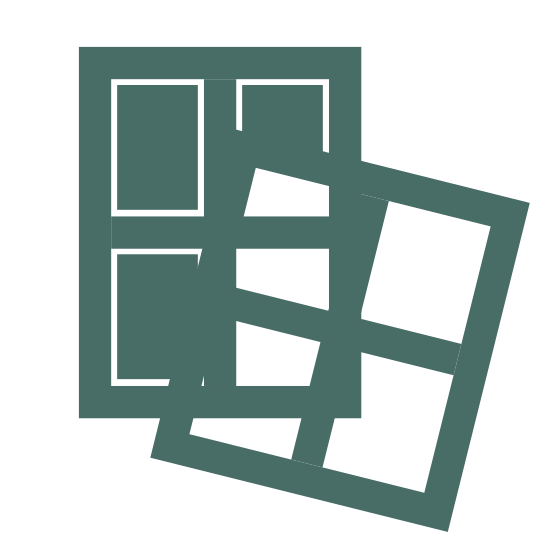
Product view
See the casement windows itself
The isolated product view keeps the sash arrangement and operating geometry clear before the room-fit and installation questions begin.

How it operates
The short answer
The sash swings on side hinges, commonly using a crank or similar operator; hardware varies by product.
Common uses
- Openings where outward swing clearance is available
- Rooms seeking a broad operable opening
Ventilation, view, and daylight
- The sash can open broadly, subject to product limits, screens, and exterior clearance.
- A single sash can provide an uninterrupted central view, with frame and hardware at the perimeter.
Cleaning and maintenance
- Hinges, operator, locks, and weather seals require product-specific care.
Installation and performance considerations
- Exterior clearance, adjacent paths, vegetation, and other obstructions should be checked.
- Compression-style closure may differ from sliding operation; compare the exact NFRC and air-leakage data.
Sources
Sources
- Window Types and Technologies — U.S. Department of Energy
- Window Energy Performance Ratings — National Fenestration Rating Council